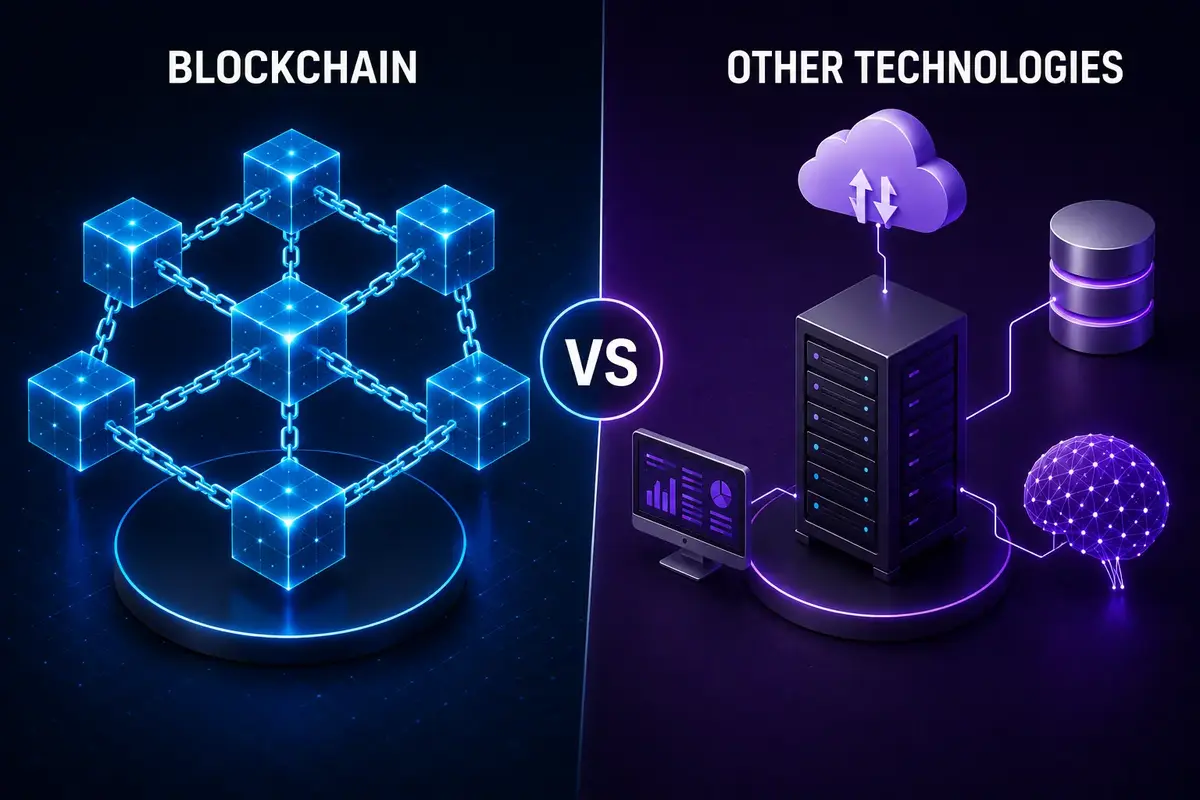
The Web2 vs Web3 debate often gets stuck on cryptocurrency, NFTs, and decentralised finance. Those topics matter, but they skip the real question: why would an ordinary company consider blockchain at all? The answer sits in how organisations manage data, coordinate transactions, and establish trust. A multi-party supply chain faces very different problems from a single online store.
Web2 remains the practical foundation for most digital businesses. Web3 adds options when shared verification, programmable agreements, or digital ownership start to matter. Knowing where the two differ helps leaders avoid expensive decisions driven by hype rather than a measurable operational need, and keeps the technology choice tied to the problem it is meant to solve.
What Is Web2 vs Web3 for Business?
Web2 is the interactive internet most businesses run on today. Online stores, SaaS products, CRM systems, and mobile apps typically sit on centrally managed infrastructure, where the company controls the application, permissions, and database. That makes features easy to update and support easy to manage, and customers simply log in through familiar accounts and interfaces.
Web3 adds blockchain infrastructure for shared transaction records, smart contracts, and digital assets held through cryptographic keys. Participants can check certain activity against a shared network instead of trusting one company's database. Some networks are open to anyone, others limited to approved organisations. Web3 doesn't remove companies. It changes how specific parts of a system work.
Data Ownership, Control, and Digital Trust
In a typical Web2 marketplace, the platform holds customer accounts, purchase histories, seller permissions, and transaction records. That's convenient, but sellers depend on its pricing, policies, and access decisions. If the marketplace raises commissions or restricts an account, sellers may have few other ways to reach those customers through that channel.
Web3 can give users more direct control over certain digital assets and make selected transactions independently verifiable. A token-based ticket, for instance, proves ownership but not every legal right or guaranteed entry. Public chains can also expose wallet activity, so sensitive customer data should stay in secured off-chain systems with clear access rules and minimal on-chain information.

How Decentralisation Changes Business Operations
Decentralisation helps when several parties must coordinate and none can rely on one organisation to keep the shared record. In a typical supply chain, the manufacturer, distributor, carrier, and retailer each run separate systems. Reconciling shipments, invoices, and delivery confirmations causes delays, especially when the records disagree with each other.
A shared blockchain record lets authorised participants verify dispatch, handover, and receipt in sequence without leaning on one party's database. It still needs reliable inputs and agreed rules. And if one trusted organisation already runs the whole workflow, a conventional database may do the job with less complexity. The case should rest on removing one specific source of friction.
Smart Contracts and Automated Business Workflows
Smart contracts are programs on a blockchain that run predefined rules once their conditions are met. They can automate selected steps, such as releasing payment after a verified delivery milestone or distributing eligible digital rewards. That cuts manual reconciliation and repeated approvals, and it leaves an auditable record of what happened and when.
A smart contract can't inspect goods itself, so the business still needs a trusted way to confirm real-world events and handle disputes. Bugs can carry direct financial cost and deployed code is hard to change. Security reviews, automated tests, permission models, and monitoring belong in the design from day one, and the underlying business rules should already be clear.
Web3 Business Model Benefits and Revenue Opportunities
Web2 companies earn through subscriptions, advertising, commissions, product sales, and service fees. Web3 can support all of those and add token-based access, programmable rewards, and selected asset tokenisation. The benefit isn't creating a token for its own sake. It's finding a sustainable way to deliver value that customers understand and are willing to pay for.
A game might let players hold certain items in their own wallets, and a membership business might issue verifiable credentials for events. Each must state exactly what rights the asset carries. Token prices swing, speculation distracts from the product, and wallets add friction, so a plain subscription or loyalty program can still be the better option.
Decentralised Apps for Companies: Practical Use Cases
Decentralised applications, or dApps, use blockchain networks or smart contracts for some core functions. The interface may look like an ordinary website, but selected operations are executed or verified on-chain. Common fits include supply chain provenance, programmable settlement, digital identity credentials, gaming items, real estate records, and token-gated membership access to defined services.
A hybrid dApp can give independent distributors a shared view of approved transactions while each keeps its own inventory and accounting software. Integration services sync selected events and access rules decide who can submit or view data. Not every business needs one, though. Internal dashboards and booking tools rarely benefit from public verification, so keep them conventional.

Web3 Customer Community Strategy and Loyalty
Companies have long built communities through social networks, loyalty programs, email lists, and membership sites. Those channels still work, but the business has little control over third-party algorithms and account policies. Web3 adds portable membership credentials and verifiable participation records, which could be claimed after a purchase or earned through involvement in a brand community.
Customers shouldn't need to learn private keys, network fees, or wallet recovery just to redeem a discount. Optional wallet connections, clear instructions, accessible support, and familiar login methods lower that barrier. A community thrives because members get real value, not because the rewards happen to sit on a blockchain, so keep the experience first in every design decision.
Security, Privacy, Compliance, and Operating Costs
Web3 brings different security risks from conventional apps. Private keys can be lost or stolen, smart contracts can hide exploitable flaws, and many public transactions can't be reversed by calling an administrator. Businesses need secure key management, transaction monitoring, access policies, and incident response procedures that have actually been tested before launch.
Privacy and cost need the same early attention. Personal data on an immutable chain can clash with data protection duties, so keep sensitive details off-chain and record only minimal proof. Budget for network fees, audits, monitoring, wallet support, integrations, and maintenance too, then compare the total against the measurable cost of the current process.
How to Move from Web2 to Web3 Without Disrupting Operations
A company doesn't have to replace its platform to explore Web3. A narrow pilot lowers risk and lets stakeholders judge the technology against a real workflow. Start with a measurable problem, such as slow partner reconciliation, disputed transaction records, or trouble verifying digital ownership, then map the process, the people involved, and where delays or disagreements arise.
Compare blockchain with a conventional database, pick a network, and settle access, privacy, and integration needs. Build a small proof of concept with realistic data, test security and recovery, and expand only if results support it. A logistics firm might log handoffs between a few partners while its existing dashboard stays in place.
Choosing the Right Technology: Web2, Web3, or Hybrid?
A centralised application usually fits when one organisation controls the workflow, products change quickly, and conventional access controls meet the trust needs. It's easier to build, run, and support. Web3 becomes relevant when independent organisations must verify shared transactions, assets need blockchain ownership records, or smart contracts can enforce common rules across parties.
Hybrid is often the sensible middle. Keep the frontend, backend, private database, and identity services, and add blockchain only where independent verification clearly pays off. Before deciding, compare total cost of ownership, transaction volume, integration effort, security, and regulation, and set success measures up front, such as shorter settlement times or fewer record disputes.
How Web Squalix Helps Businesses Evaluate Web3
Choosing a blockchain architecture takes more than picking a network and writing smart contracts. Businesses need to understand their existing systems, define trust boundaries between participants, identify sensitive data, and plan for operations after launch. Integration with established applications often matters as much as the blockchain component itself.
Web Squalix provides blockchain development and custom software solutions for businesses exploring new technology. An engagement can start with requirements discovery, architecture evaluation, and a focused proof of concept before any production build. The goal is to tie technology decisions to operational needs rather than adopting decentralisation because it happens to be trending.

John leads the company’s blockchain strategy and development, driving secure and scalable solutions across smart contracts, decentralized applications, and blockchain infrastructure.