Fintech Development

Fintech App Development Company in New York City, NY

New York is where financial products get tested the hardest. Your users might be traders who expect instant screens, small business owners chasing faster payouts, retail customers who think twice before every new login, or compliance teams who read every line of an audit trail. Squalix designs, builds, launches and maintains fintech and blockchain apps for New York startups, lenders, wealth firms, payment companies and established financial institutions, with security and regulation planned in from the first sprint.

  • iOS, Android & web fintech apps
  • PCI DSS and SOC 2 aware builds
  • KYC, AML and NYDFS aware design
  • US Eastern working hours
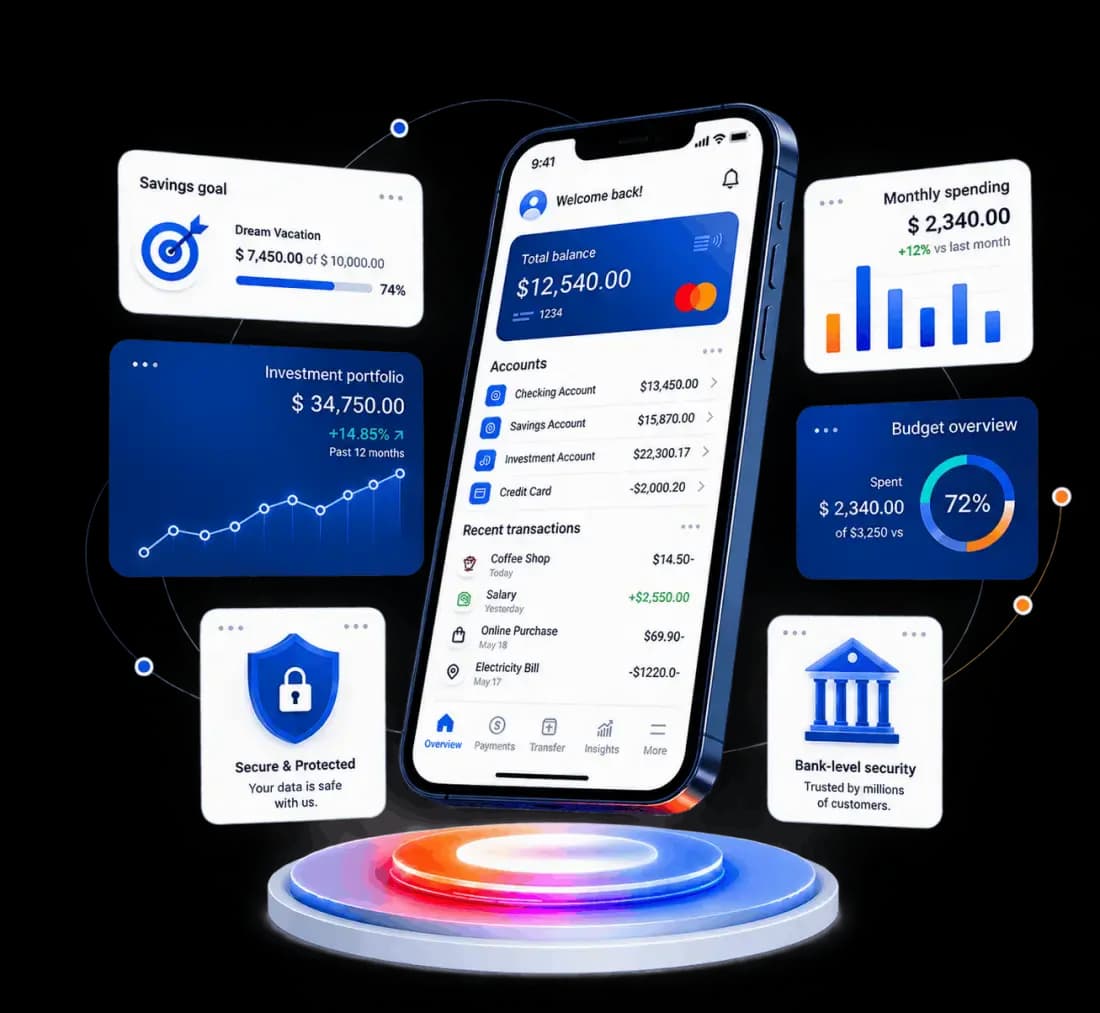
fintech app development company New York City building secure payment and blockchain apps
Built for NYC

Why New York Fintech Businesses Need a More Careful Kind of App

Security and compliance come first

A fintech app moves money and holds identity data, so a weak spot is never just a bug. We plan encryption, key management, access control and audit logging at the architecture stage, and we map the build against PCI DSS, SOC 2 and the NYDFS cybersecurity rules that many New York firms have to follow.

Accessibility is a business risk

Banking and payment apps are public facing, and inaccessible ones draw complaints and legal claims. We design to WCAG standards from the first wireframe, covering contrast, screen readers and clear error messages, because retrofitting it after launch costs far more than building it in.

Users range from casual to expert

One product often serves a first-time saver on a phone and a finance team reconciling hundreds of transactions on a desktop. We design flows for both groups and test them with real people instead of assuming how they behave.

Approvals and partners slow things down

Sponsor banks, card processors, compliance officers and legal reviewers all get a say before launch. We build the plan around those dependencies so one pending sign-off doesn't freeze the rest of the project.

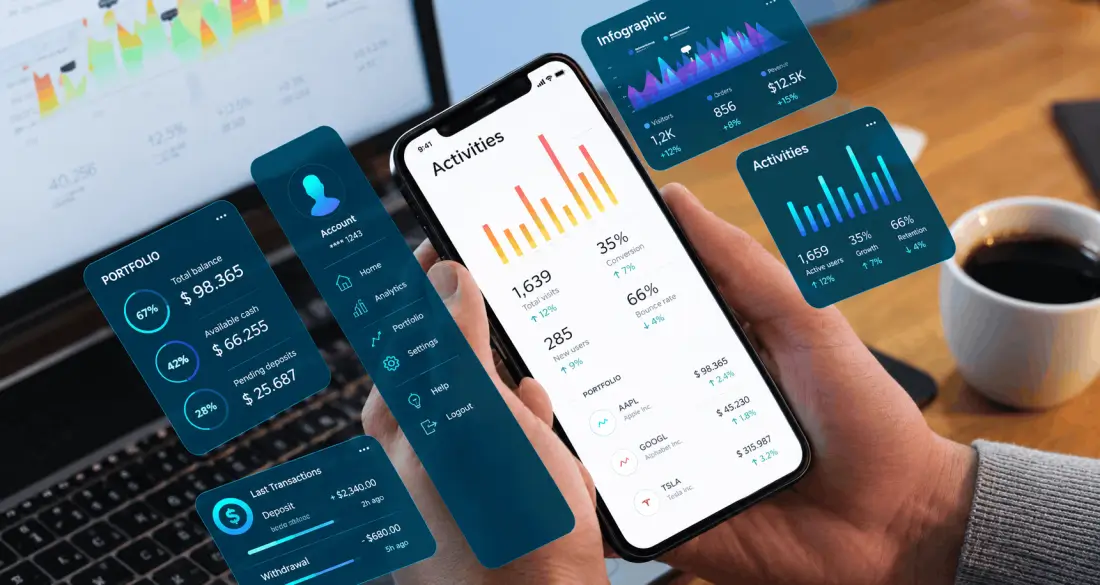
Fintech analytics dashboard and blockchain transaction view on a laptop in a New York office, showing fintech app development work
Our Expertise

Fintech and blockchain app development services we build

As a custom fintech app development company, we build secure, scalable financial software for teams that need to launch a new product, replace an ageing system or add payments and digital assets to what they already run. Each engagement starts with your users and your regulators, and the technology choice follows from there.

Fintech App Development

Mobile banking, neobank and personal finance apps for iOS, Android and web. We handle onboarding, account views, transfers and notifications, and we connect them to your core systems or a banking-as-a-service partner.

Payment App and Gateway Integration

Card, ACH and wallet payments built on providers such as Stripe, Plaid, Adyen and Marqeta. We focus on payment success rates, retries, reconciliation and clear failure messages, not just the happy path.

Digital Lending and Credit Platforms

Loan origination, credit decisioning, repayment schedules and collections tools. We build the borrower app and the back-office screens together so underwriters and customers work from the same data.

Wealth, Trading and Investment Apps

Portfolio dashboards, robo-advisory flows, brokerage and trading interfaces with live market data. We pay close attention to latency, chart accuracy and the disclosures regulators expect users to see.

KYC, Fraud Detection and Compliance Tooling

Identity verification, transaction monitoring, AML checks and audit trails wired into the product. Compliance teams get the reports they need without engineers pulling data by hand every quarter.

AI-Powered Fintech Solutions

Machine learning for fraud scoring, credit risk, spending insights and document processing, plus conversational assistants for customer support. We keep a human review step wherever a wrong decision would cost a customer money.

Blockchain App Development, Web3 and Crypto Wallets

Blockchain app development for wallets, tokenized assets, DeFi products, payment rails and smart contracts on Ethereum, Polygon, Solana or Hyperledger. We start by checking whether you need a blockchain at all, and we plan for independent smart contract audits and the licensing questions New York raises.

App Maintenance and Support

Launch is the start of the work, not the end. We handle OS updates, dependency patches, security fixes, performance monitoring and new features after release, so your app keeps passing reviews and audits.

Why work with Web Squalix?

Our team has worked across fintech, healthcare, commerce and logistics, using current technology to help businesses launch products that earn user trust and hold up under real transaction volume.

Honest Recommendations

If you don't need a custom app, we'll say so. If you don't need a blockchain, or a cross-platform build will do the job, we won't push you toward the pricier option.

Design and Engineering Under One Roof

No handoff gaps between the people who design your app and the people who build it, which matters when a single payment screen carries legal wording.

Security-Minded Development

Encryption, secure authentication, key management and careful data handling are part of the build, not an add-on, and we plan for PCI DSS and SOC 2 expectations early.

Scalable Foundations

We build so the app can grow from a few hundred users to many thousands, and from a few transactions a day to a few per second, without a rewrite.

Continued Support

Our team stays with your product after launch, covering patches, monitoring and compliance-driven changes.

Our Process

How We Work With New York Clients

We work with teams across the US from our development base, so you get a dedicated team without the overhead of a Manhattan agency. Calls, standups and demos are scheduled around US Eastern hours, and we communicate over Slack, email and video calls, so you always know who is working on what and what ships next.

Discovery

We talk through your goals, users, budget, licensing position and timeline, and we tell you if an idea needs adjusting before you spend money on it.

Design

Wireframes and clickable prototypes you can review early, including the awkward screens like failed payments and identity checks, so changes are still cheap.

Development

Agile sprints with regular demos. You see working software every couple of weeks, with security reviews built into each cycle instead of saved for the end.

Testing

Real-device testing, penetration testing, load testing on payment flows and, for blockchain products, an independent smart contract audit before anything goes live.

Launch

We handle App Store and Google Play submission, including the financial app review requirements that trip up first-time publishers, and we plan a staged rollout.

Support

Ongoing updates, monitoring and improvements as your user base and transaction volume grow.
Fintech Technologies

Modern technologies to build secure, scalable, and audit-ready fintech apps.

We pick tools that suit the actual problem, not the latest trend. Expand below to see the full set of mobile, backend, cloud, payment and blockchain technologies we use for fintech and Web3 work.

Database

Reliable and scalable databases for modern applications.

MySQLMySQLPostgreSQLPostgreSQLMongoDBMongoDBRedisRedisFirebaseFirebase
Backend

Powerful and flexible backend solutions for high performance.

Node.jsNode.jsNestJSNestJSPHPPHPPythonPython
Cloud / DevOps

Secure, scalable and automated infrastructure for growth.

AWSAWSKubernetesKubernetesGoogle CloudGoogle CloudAzureAzure
Frontend

Modern and interactive user interfaces for seamless experiences.

React.jsReact.jsTypeScriptTypeScriptNext.jsNext.jsVue.jsVue.jsThree.jsThree.js
Mobile

Cross-platform mobile apps for better engagement.

React NativeReact NativeFlutterFlutterSwiftSwift
Other industries

We also build here.

Education

Learning apps, student portals and training platforms for universities and professional programs. More on EdTech app development.

Explore More

On-Demand

On-demand and logistics. Booking, tracking and dispatch apps. Our ShowFar ride-hailing platform is one example of live GPS and cashless payments working together.

Explore More

Media & OTT

Launch high-performance OTT and video streaming platforms at scale. Enable low-latency streaming, DRM protection, and content monetization. Use AI-powered recommendations to boost engagement and user retention.

Explore More

Real Estate and PropTech

Listing apps, virtual tours and CRM-connected tools for agents and property managers. See real estate app development.

Explore More

Ready to Build Your Fintech Product?

Whether you have a fully scoped idea or just a rough concept, we're happy to talk it through. Tell us about your fintech or blockchain project and we'll get back to you with practical next steps, not a sales script.

Confidential, NDA available
FAQ'S

Frequently Asked Questions

Answers to what New York founders, lenders and finance teams ask us most before starting a fintech or blockchain app project.

How much does fintech app development cost in New York?

It depends on scope, and compliance moves the number more than screen count does. A focused payments MVP costs far less than a lending platform with KYC, credit decisioning, an admin console and bank integrations. After a short discovery call we can give you a realistic estimate and a phased plan, so you can launch the essentials first and add features once real users are in.

Which regulations apply to a fintech app in New York?

It depends on what the product does. Common ones include PCI DSS for card data, KYC and AML rules, GLBA privacy requirements and, for many New York financial firms, the NYDFS cybersecurity regulation. Virtual currency activity may also require a BitLicense. We build the technical controls and keep your documentation tidy, but your legal counsel should confirm exactly which rules cover your product.

Should a fintech app be native or cross-platform?

Both can work. Native Swift and Kotlin suit apps with heavy biometrics, real-time charts or strict performance needs. React Native or Flutter often make sense for an early product where speed to market and budget matter. We look at your users and roadmap and tell you honestly which fits, even when the cheaper option means less work for us.

Which blockchain platforms do you build on?

We build on Ethereum and EVM-compatible networks such as Polygon, on Solana, and on permissioned platforms like Hyperledger Fabric for private consortium use. The choice depends on transaction cost, speed, developer ecosystem and who needs to see the data. We explain the trade-offs in plain language before anything is committed.

Can you add AI features such as fraud detection to a fintech app?

Yes. Typical uses include transaction anomaly scoring, credit risk models, spending insights and document extraction for onboarding. We keep decisions explainable, log what the model saw, and keep a human reviewer in the loop for high-impact calls, which also makes regulator and auditor conversations easier.

Do you work with startups or only larger institutions?

Both. We've built products for early-stage founders testing an idea and for established businesses modernizing a mature product, and we scale the process to fit. A startup usually gets a lean MVP plan, while an institution gets heavier documentation and review gates.

Will you support the app after launch?

Yes. We offer maintenance plans covering OS and SDK updates, security patches, bug fixes, performance monitoring and new features. Financial apps need regular attention because payment providers, app store rules and regulations keep changing.

How long does it take to build a fintech app?

A focused MVP usually takes four to six months, a little longer than a typical consumer app because of security reviews, partner onboarding and compliance checks. Larger platforms take longer. We give you a timeline with milestones before work begins, and we flag early which dependencies, such as a sponsor bank, could stretch it.

Can you work with a sponsor bank or banking-as-a-service provider?

Yes. We have integrated with processors and data providers such as Stripe, Plaid, Marqeta and Dwolla, and we can connect to the bank partner you already have. Early in discovery we map who owns which responsibility, because that split decides a lot of the architecture and the launch schedule.

When does a product actually need blockchain?

Less often than people think. Blockchain earns its place when several parties who don't fully trust each other need a shared, tamper-resistant record, or when you are issuing digital assets, tokenized securities or on-chain payments. If a normal database and a good audit log solve your problem, we'll recommend that, because it is cheaper to run and simpler to regulate.

How do you keep crypto wallets and smart contracts secure?

We use audited contract libraries, write thorough tests, and recommend an independent third-party audit before mainnet launch. For wallets we design key storage carefully, using options such as hardware-backed keys, multi-signature approval or MPC custody, depending on who holds the funds. No team can promise zero risk, but a disciplined process removes the common mistakes.

Can you integrate with our existing core banking or legacy systems?

Often, yes. Many firms in New York run older systems that can't be replaced overnight, so we build an API layer or middleware around them and modernize in stages. We review the current system first and tell you what can be connected safely and what is better rebuilt.

Who owns the code, and will you sign an NDA?

We're happy to sign an NDA before you share anything sensitive, and the source code and IP for your product belong to you. We keep repositories, environments and documentation organized so another team could take over if you ever wanted that.

Can you take over an existing fintech or blockchain app?

Often, yes. We'll review the code, the infrastructure and the security posture first, and then tell you honestly whether it's worth improving or rebuilding. You get a written assessment either way.