What Is Web3 Authentication?
Web3 authentication is a way of proving who you are, or more precisely, proving that you control a specific wallet, without typing in a password. Instead of a username and password stored on a server, the application asks your wallet to sign a small piece of text using your private key, then checks that signature against your public wallet address.
- Public and private keys: every wallet has a private key kept secret by the owner, and a public key or address that can be shared openly, similar to a username
- Message signing: the application asks the wallet to sign a one-time message rather than collecting a password
- Cryptographic signatures: signing proves ownership of the private key without ever exposing the key itself
- Verification: the app checks the signature against the public address, and a match confirms authentication
- No traditional password: nothing is created, stored, or transmitted that resembles a username-password pair
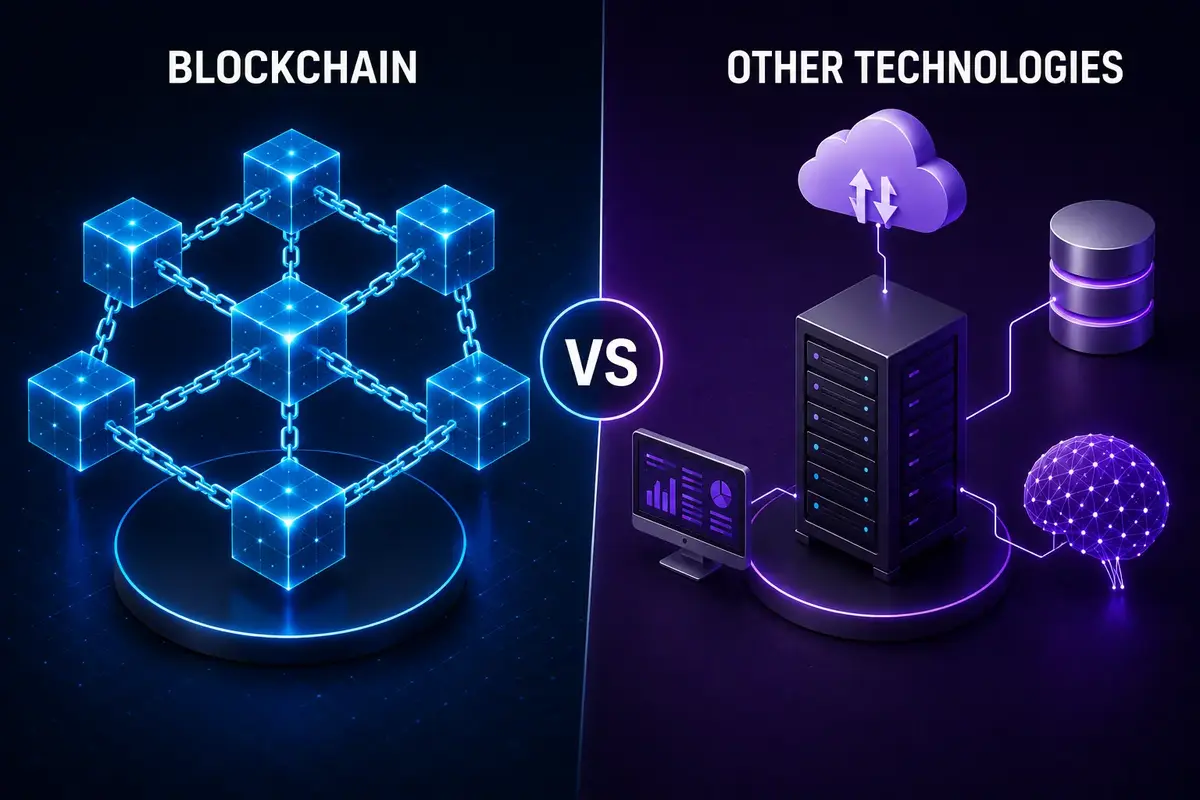
| Web2 Login | Web3 Wallet Authentication |
|---|---|
| Username and password stored on a server | No password; ownership proven via cryptographic signature |
| Company controls the account | User controls the private key |
| Password reset via email | No traditional reset; access depends on key recovery setup |
| Centralized database risk | Distributed, cryptographic verification |
Neither model is inherently better across the board. Businesses need to understand the trade-offs rather than assume one approach automatically beats the other.
Why Digital Wallets Are Becoming Identity Hubs
A wallet was originally built to hold and send cryptocurrency. But because it already contains a verifiable, user-controlled key pair, developers realized it could double as a login credential for almost any decentralized application.
- One wallet, multiple applications: the same address can log into a DeFi platform, a marketplace, a game, and a DAO without separate registrations
- User-controlled identity: no central company holds the master record of a user's identity across these apps
- Portable digital identity: reputation, transaction history, and credentials move with the user instead of staying locked in one platform
- Ownership of credentials and assets: NFTs, tokens, and on-chain badges tied to a wallet remain under the user's control
- Reduced dependence on centralized identity providers: less reliance on a single company as gatekeeper to a user's online identity
- Cross-ecosystem use: the same pattern already shows up across DeFi, gaming, NFT marketplaces, and DAO governance tools
Key Benefits of Wallet-Based Web3 Authentication
There are measurable advantages to this model for both users and the businesses building on it, though it's worth being direct that wallet authentication doesn't automatically solve every security or privacy problem.
- Passwordless authentication, removing forgotten passwords and password-field phishing
- User ownership and control, since the individual holds the credential rather than the platform
- Reduced credential storage, lowering certain compliance burdens for businesses
- Interoperability across many decentralized applications using one identity
- Better privacy possibilities, letting users choose what to share and with whom
- Faster onboarding compared to filling out registration forms
- Blockchain-based verification that is cryptographically provable rather than trust-based
- Direct integration with decentralized applications without separate account systems
If a private key is stolen, lost, or mishandled, the consequences can be more severe than a forgotten password, because there's often no central authority to step in and reset access. Businesses adopting this model need to plan for that reality rather than assume it away.
How Web3 Wallet Authentication Works

- User selects Connect Wallet or Sign In on the application
- The application detects the compatible wallet installed in the browser or on the device
- The wallet requests permission or a signature, typically a one-time message containing a random nonce
- The user approves the request through their wallet interface, reviewing what they're signing
- The application verifies the cryptographic signature against the public wallet address
- A secure session is created, usually backed by a token, so the user isn't asked to sign a message on every page load
A few details make or break the security of this flow. Nonce handling matters: the random nonce must be unique and expire quickly so a captured signature can't be reused in a replay attack. Signature verification must happen on a trusted backend rather than the client side. Sessions should expire, stay tied to the correct wallet address, and remain revocable. Users should also be able to clearly see what they're signing, since malicious sites sometimes disguise harmful transactions as simple login requests. Getting these details right is where experienced Web3 Development Services genuinely earn their value, the concept is simple, but a poorly implemented version can open serious security gaps.
Digital Wallets, Decentralized Identity, and Self-Sovereign Identity
It's tempting to think a crypto wallet and a full decentralized identity system are the same thing. They're related, but not identical. A wallet proves you control a key. A decentralized identity system builds on top of that to represent broader claims about who you are.

- Decentralized identifiers (DIDs): unique identifiers not issued or controlled by a central authority, often anchored to a blockchain
- Verifiable credentials: digital, cryptographically signed versions of things like diplomas, licenses, or memberships
- Self-sovereign identity (SSI): a model where individuals hold and manage their own identity data rather than relying on a central database
- Selective disclosure: the ability to prove a specific fact, such as being over 18, without revealing unrelated personal data
- On-chain vs. off-chain identity information: some data lives directly on a blockchain, while sensitive information is usually kept off-chain and referenced through cryptographic proofs
In short, a wallet is the key. Decentralized identity is the broader system that uses that key to manage verifiable claims about a person. Businesses building identity-heavy products, think healthcare records, professional certifications, or KYC-sensitive platforms, usually need both pieces working together.
Challenges and Security Considerations
A balanced look at wallet-based authentication has to include its limitations, since no authentication model is without trade-offs.
- Lost wallet access, since there's often no traditional forgot password option
- Private-key security, with keys stored insecurely being a common point of failure
- Phishing and malicious signing requests that look harmless but authorize harmful actions
- User experience challenges for users unfamiliar with wallets, seed phrases, or gas fees
- Wallet compatibility differences across wallets and blockchains
- Regulatory and compliance considerations, especially in finance and healthcare
- Privacy concerns, since wallet activity is often publicly visible on-chain
- Account recovery, which is genuinely difficult to design without reintroducing centralized risk
- Smart contract and integration risks from poorly audited contracts or integration code
Practical mitigations include multi-signature wallets for higher-value accounts, social or guardian-based recovery mechanisms, clear on-screen explanations of what a signature request actually does, regular smart contract audits, and combining wallet authentication with additional verification steps for sensitive actions.
How a Web3 Development Company Can Build Secure Wallet Authentication
Implementing wallet-based login sounds simple in concept, but doing it securely and at scale involves several moving parts. This is typically where working with a dedicated Web3 Development Company makes a measurable difference.
- Wallet integration experience across multiple providers, including browser extensions, mobile wallets, and hardware wallets
- Authentication architecture with a clear separation between frontend signature requests and backend verification logic
- Blockchain selection guidance based on speed, cost, and security needs
- Smart contract integration where identity or credential logic needs to live on-chain
- Reliable backend verification, including nonce generation, signature validation, and session handling
- Clean API development so authentication plugs into existing systems without a full rebuild
- Security testing focused specifically on authentication flows
- User experience design that doesn't assume every user is a crypto native
- Scalable architecture that holds up as user numbers and transaction volume grow
- Ongoing maintenance and upgrades as wallet standards and blockchain protocols evolve
Beyond the authentication feature itself, broader Web3 Development Services often cover related needs, decentralized application development, wallet development, smart contract auditing, and blockchain infrastructure, which matters if wallet login is just the first piece of a larger product roadmap. Web Squalix works with founders and enterprise teams designing wallet-based authentication and identity systems across multiple chains, combining authentication architecture experience with broader blockchain development services.
The Future of Digital Wallets as Identity Hubs
It's easy to overstate where this technology is headed, so it's worth sticking to grounded, practical trends rather than sweeping predictions.
- Financial services: wallet-linked identity for lending, trading, and account verification
- Digital communities: token-gated access to forums, events, and membership groups
- Gaming: portable in-game assets and achievements tied to a persistent wallet identity
- E-commerce: loyalty points or ownership records that move with the customer rather than staying locked in one store's system
- Education: verifiable, tamper-resistant certificates and diplomas
- Healthcare: patient-controlled access to records, shared selectively with providers
- Professional credentials: licenses and certifications verifiable instantly without contacting the issuing body
- Loyalty programs: cross-brand rewards systems built on shared, portable identity standards
- Decentralized applications generally: a consistent login experience across an expanding DApp ecosystem
None of this replaces traditional identity systems overnight. It's more likely that wallet-based identity grows alongside existing systems, picking up ground in areas where portability and user control offer a clear advantage.
Conclusion
Digital wallets started as a way to hold tokens. Digital wallets are becoming portable, user-controlled identities that work across many decentralized applications. They offer password less access and better control, but also require strong security, recovery, and user-friendly design. . For businesses exploring this space, getting the authentication architecture, security testing, and user experience right takes deliberate engineering work, which is usually the point where it makes sense to bring in an experienced Web3 Development Company to design authentication that's secure without being a burden on users.

John Douglas leads delivery and engineering teams building blockchain, wallet, and Web3 platforms, with a focus on translating complex security and identity requirements into production-ready architecture.